Website
Website for the Convent of St. Clare's Nuns in Old Sącz
A new website for the convent founded by Saint Kinga in 1280: classic typography, automatically updated daily liturgy, Polish, English and Hungarian versions, and WCAG 2.2 AA compliance. A static site that the sisters edit using a CMS.
12/10/2026
The Klasztor Sióstr Klarysek (St. Clare's Convent) in Stary Sącz was founded by Saint Kinga in 1280, making it one of the oldest institutions of its kind in Poland. For years, its website looked like any other WordPress template.
The new website at klaryski.starysacz.org.pl aimed to capture the essence of the place while being accessible, multilingual, and easy for the sisters to maintain themselves.
A design that fits the place
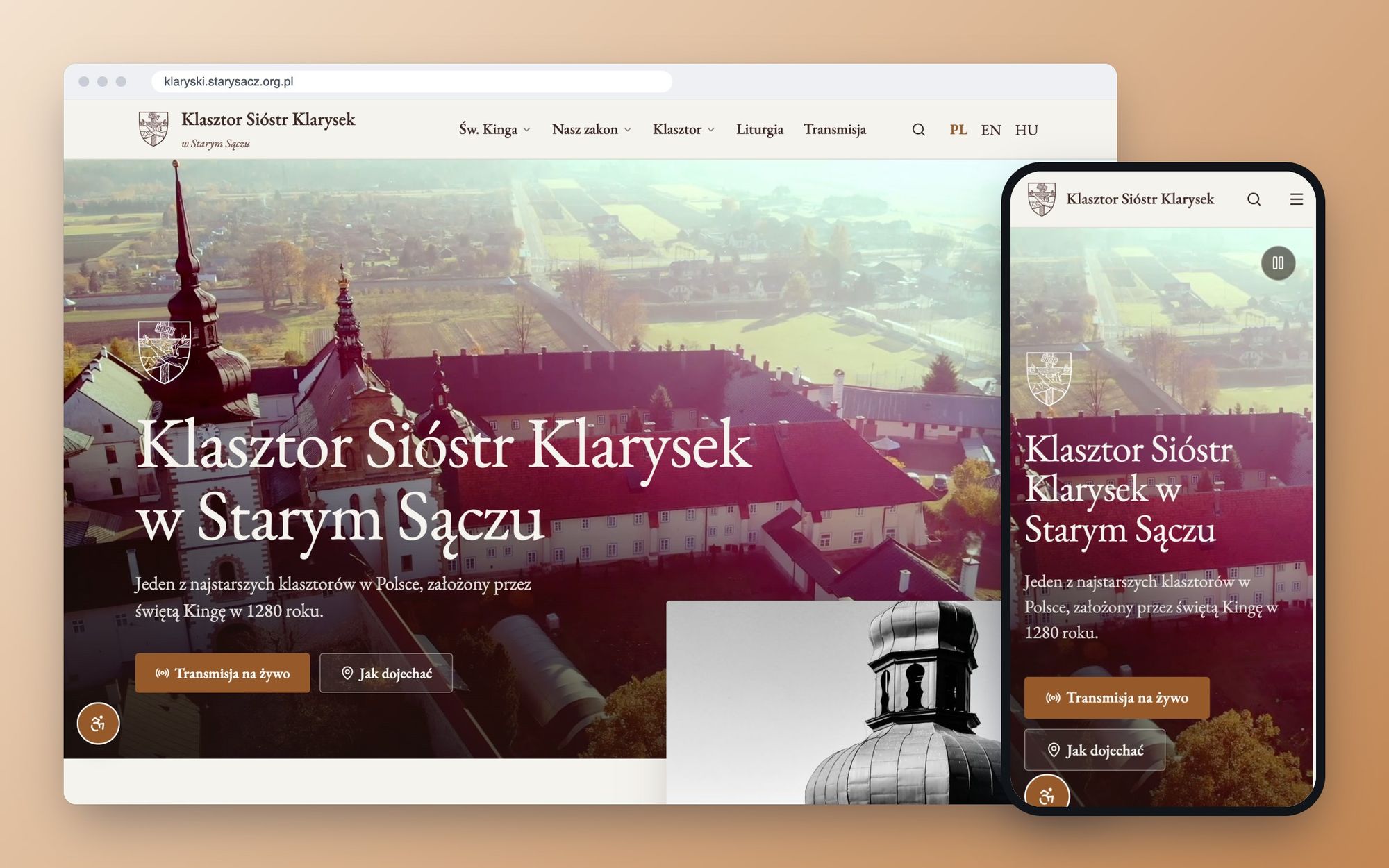
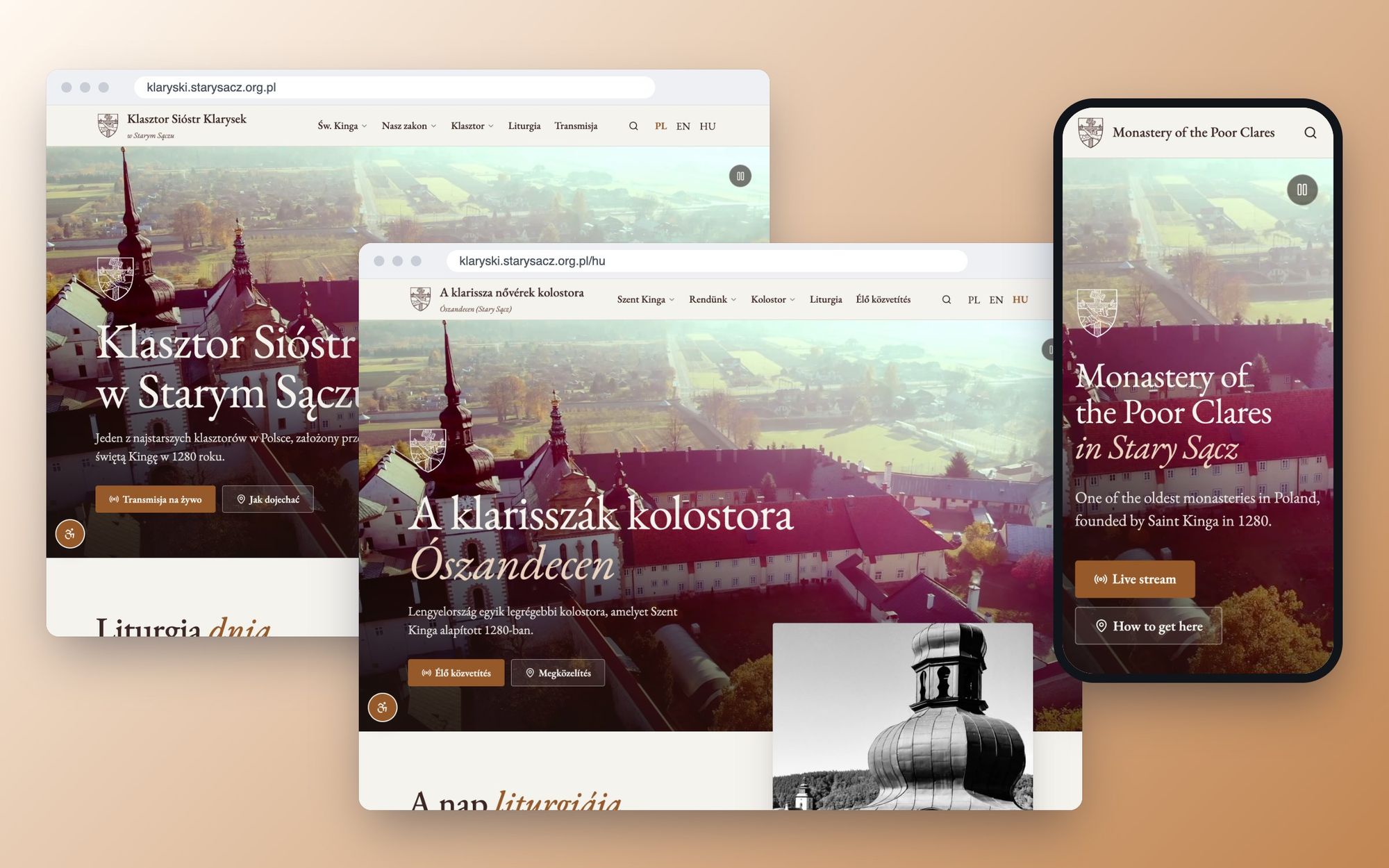
The subject matter itself called for something other than a rigid grid of tiles. I opted for the classic typography of EB Garamond, a warm palette in parchment and bronze tones, and asymmetrical layouts where text and images overlap.
The website opens with a drone video of the monastery, featuring a pause button. Subpages include black and white shots of the courtyard and tower, with a drawing of the monastery in the footer. All photos are from an aerial survey of the monastery, not stock images.
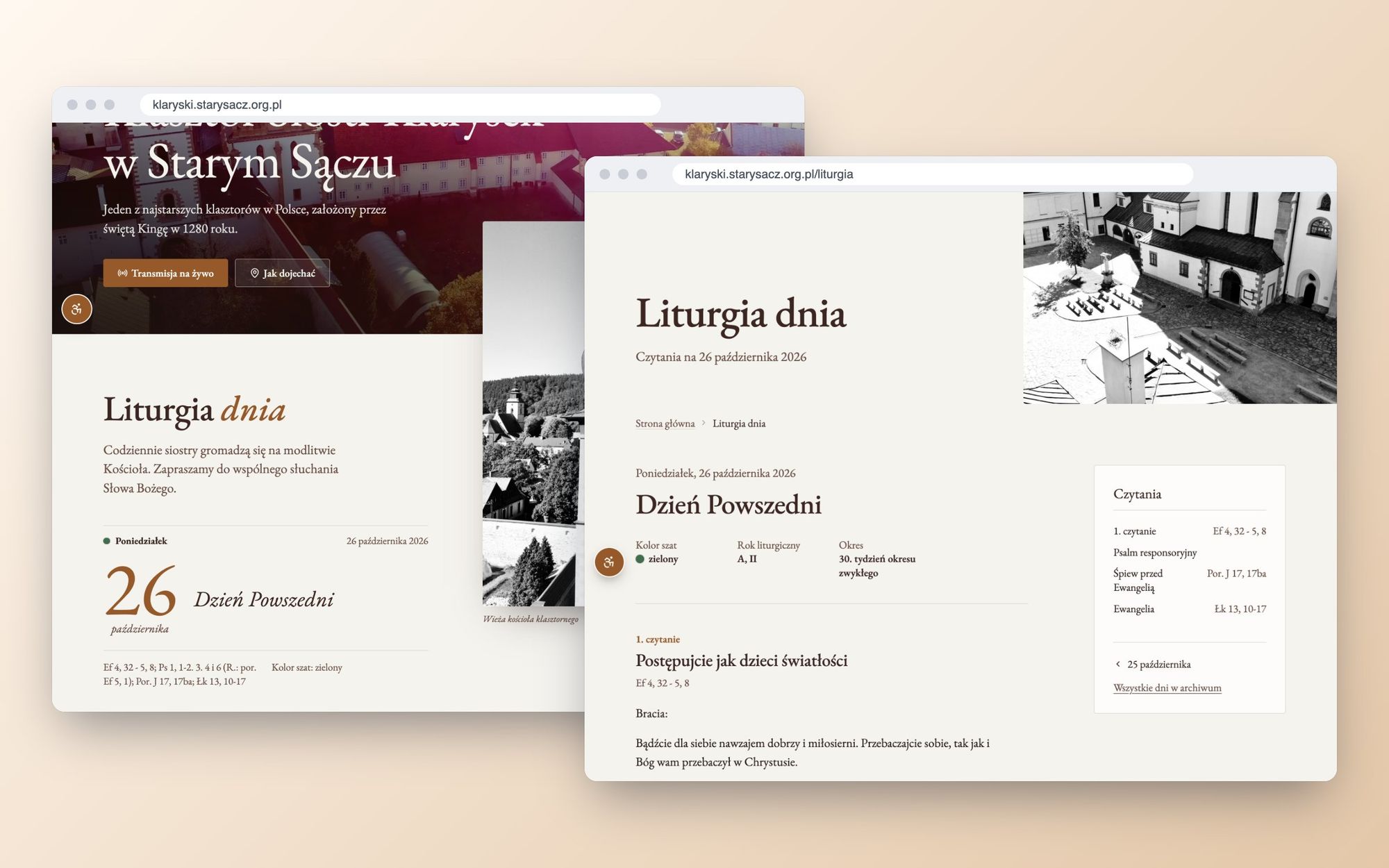
Auto-updating Daily Liturgy
The sisters wanted the daily readings to be automatically updated on the website. Manually pasting them every morning wasn't an option, and an external widget in an iframe wouldn't match the site's design.
So, I built my own importer:
- the script daily fetches the readings and saves them in Directus as plain content
- my own module calculates the liturgical calendar of the Church in Poland: period, week, year and vestment color,
- the page receives readings, a psalm with a refrain, and the Gospel in the same typography as the rest
- every day is stored in the archive, so you can return to readings from previous days.
Content from the old site, but in a better format
The website contains a lot of historical content: the life of Saint Kinga, the history of the cult, legends, writings by Saint Clare and Saint Francis, and a guide to the church. I moved these from the old portal to the CMS and organized them right away.
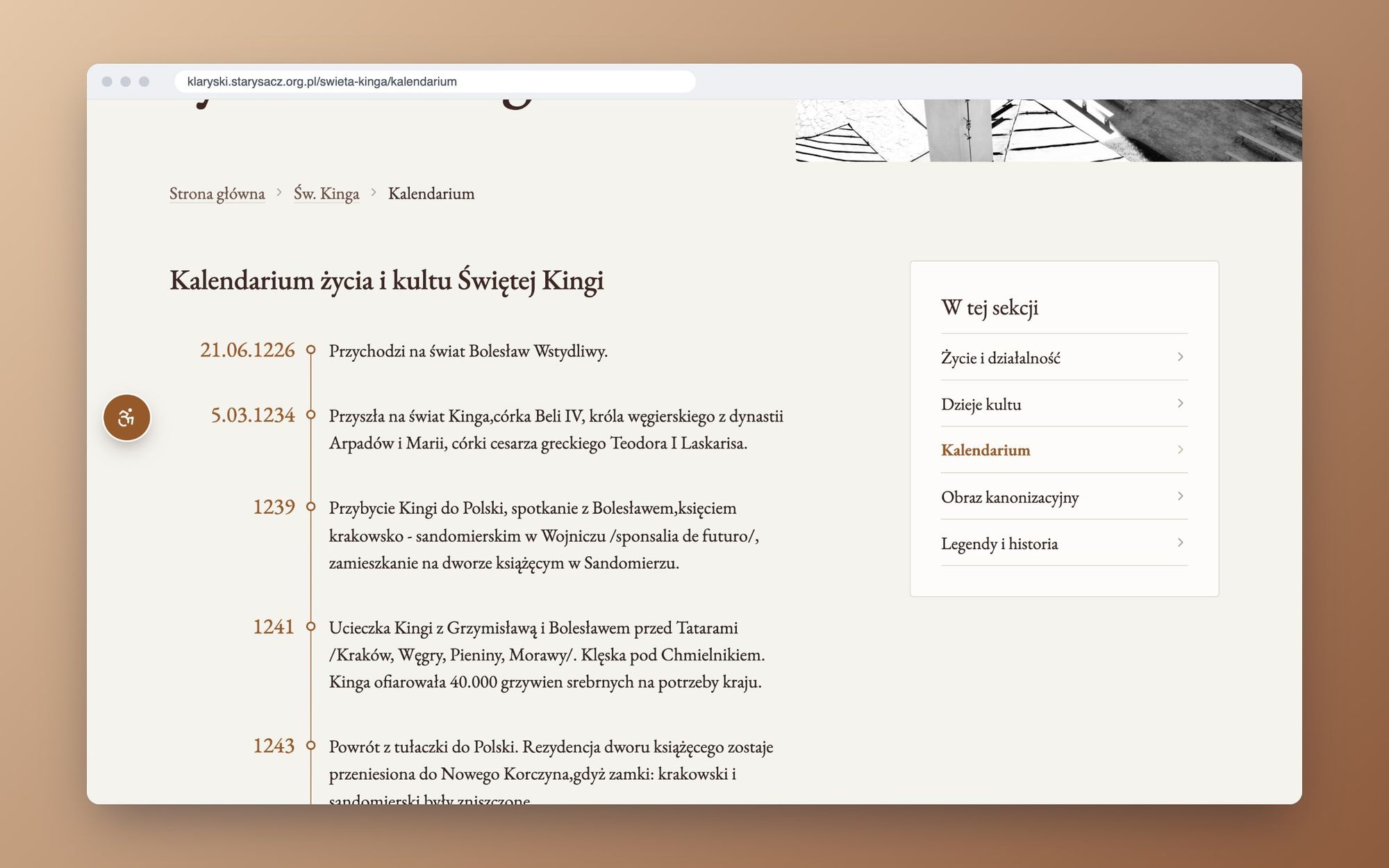
The timeline of Saint Kinga's life and the monastery's history are now presented as a timeline rather than a long list of dates in a paragraph. The parser understands daily dates, approximate ones (‘around 1247’), year ranges, and foreign language versions too.
In Polish, English and Hungarian
Saint Kinga was the daughter of the King of Hungary, and the monastery is regularly visited by pilgrims from Hungary. That's why, in addition to English, the website has a full Hungarian version.
- shared routes for all languages, so there's no need to maintain three separate page trees
- interface dictionary for PL, EN and HU languages, including dates in the calendar,
- language switcher in the header and correct lang and hreflang attributes for search engines.
Accessibility Without Overlays
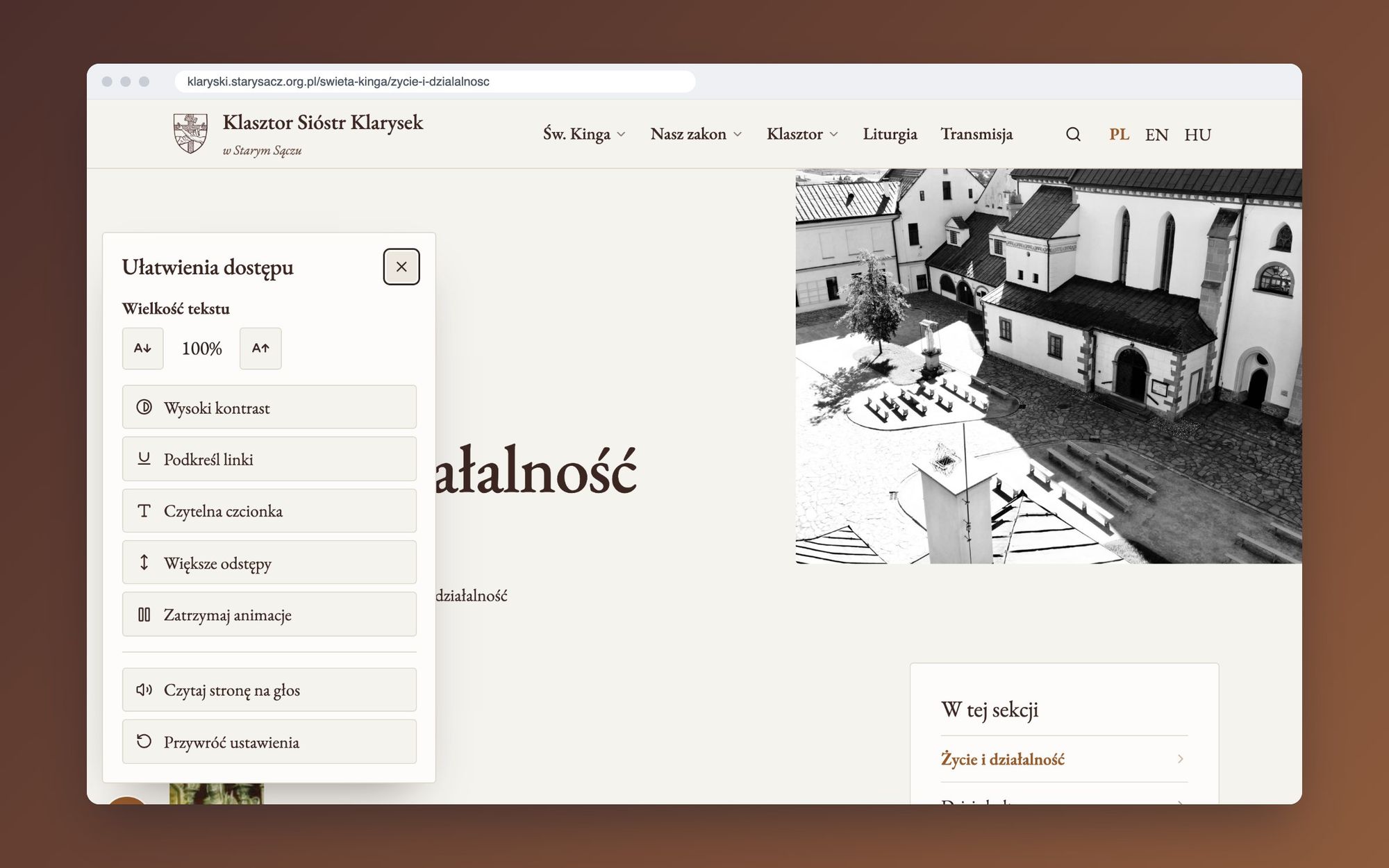
The website meets WCAG 2.2 AA standards in the code itself: semantic HTML, correct heading order, visible focus, contrast, and image descriptions. The accessibility panel is an additional feature for those who want to customise settings, not a fix for existing issues.
In the panel, you can:
- increase text size,
- enable high contrast and underline links,
- switch to a simpler, more readable font instead of Garamond,
- increase line spacing,
- pause background animations and video,
- enable reading the page aloud.
Practical things for visitors
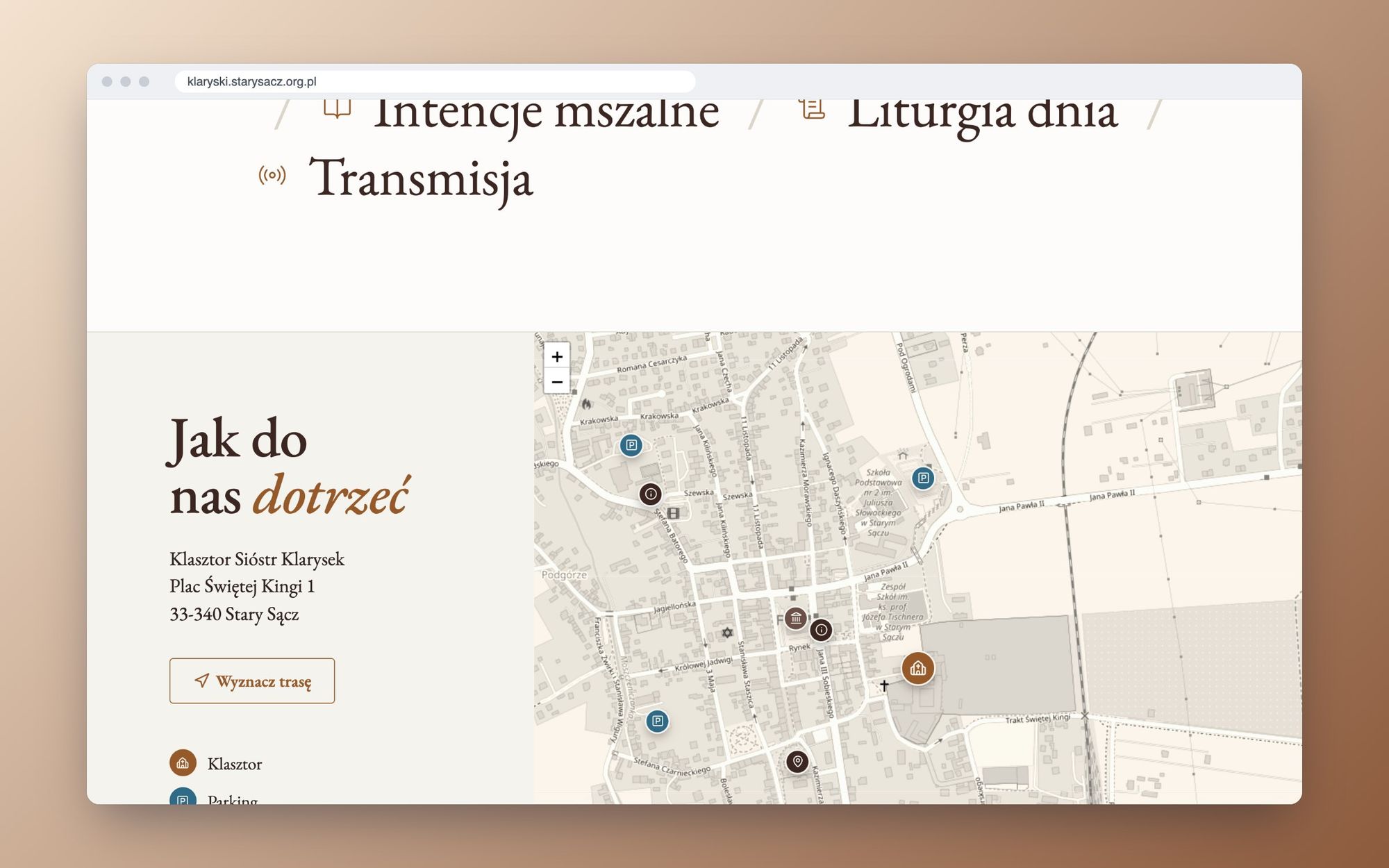
- streaming of Masses and services from the monastery's YouTube channel without manual link replacement,
- services schedule and mass intentions edited by the sisters in the CMS,
- an interactive map using Leaflet and OpenStreetMap, featuring local parking areas and nearby attractions,
- full-text search engine that works without a server,
- donation applet and bank account number in the footer.
Static site with CMS backend
The site is statically generated. Visitors receive ready HTML files from the nginx server, without a database or any server-side code. This is the fastest and most secure form of website you can deploy.
The sisters edit content in Directus. When they save something in the CMS, a webhook is triggered, and a separate container rebuilds the website in the background to a new directory. Only when the build is ready does it replace the old one, so the site never goes down for even a second.
The search functionality is provided by Pagefind, which also builds the index as the site is developed. Old WordPress URLs are redirected to new ones, and the sitemap and robots.txt files are generated automatically.
When working on a website for a monastery that is over 700 years old, the easiest thing to do is something modern. The challenge is to create something that will still fit the place in a few years.
- Aleksander Kowal
A framework for future projects
From the outset, I also treated this project as a framework for other websites: Directus configuration with a schema in the repository, Makefile for local work, CI on OneDev, and deployment based on pull requests after version tagging. Subsequent institutional websites are already starting from this base.
Stack
- Astro in static mode, TailwindCSS and DaisyUI with a custom theme,
- Directus as a CMS, with a container building the site after a webhook,
- Pagefind for searching, Leaflet.js for maps,
- the nginx server serves pre-compiled files
- Docker, OneDev CI, deployment using v* tags.